Do Twitch Viewer Bots Actually Work? The Honest Answer
You’re sitting at three viewers. Maybe zero. Then an ad slides in promising “1,000 Twitch viewers for $5,” and the question writes itself: do Twitch viewer bots actually work? The answer nobody hawking these things hands you straight is that it hangs on what you mean by “work.” And the cheap version? It usually blows up in your face.
So let’s cut the crap. I’ve watched people torch real money on this exact mistake. This is the honest breakdown: what viewbotting actually is, whether it does anything worth a damn, whether it gets you banned, how Twitch and your own chat sniff it out, and where the line sits between hollow bots and real people in front of your stream. No hype, no fake scare tactics.
What Is Viewbotting?
So what is viewbotting, stripped of the marketing fog? It’s using automated software or a paid service to pump up the viewer number on a live stream. No real people watching. Just a script firing fake “connections” at your channel so the counter climbs while the room stays empty.
Comes in a few flavors. Not equal:
- Free/cheap view bots — open-source scripts or bargain panels spamming empty connections. No chat, no retention, and a detection risk that lights up like a flare.
- Chat bots — fake accounts dribbling canned messages to make a dead channel look alive. Usually bundled with view bots to paper over the tell-tale silence.
- Viewer services — paid platforms that, at the legit end, put real, retained viewers and genuine social proof in the room instead of throwaway connections.
That last line is the whole damn ballgame. It’s where the confusion lives, and the wasted money.
Do Twitch Viewer Bots Actually Work?
First, define “work,” because the whole argument falls apart right there. If “work” means make the number tick up for an hour, fine, a bot pulls that off. But if “work” means grow a channel that earns you something, hollow bots whiff on nearly everything that counts. Does viewbotting work at that level? No. Not close.
What a fake viewer never, ever does:
- Chat — bots sit silent, so your engagement flatlines.
- Retention — they vanish the second you stop paying; watch-time stays near zero.
- Follows and subs — empty connections never convert, so your real growth metrics don’t move.
- The algorithm — Twitch surfaces channels with engagement and watch-time, not a raw number it suspects is fake.
One thing inflated numbers genuinely move, though: social proof. Somebody scrolling a category clicks a stream showing 25 viewers over one showing 0, every time. That psychology is dead real, and it’s the entire reason this boosting industry exists. The catch nobody admits: it only pays off if the boost looks believable and the channel under it is real enough to turn that curious clicker into a follower. Slap a $5 flood of 1,000 fake viewers next to a graveyard chat and you’ve done the opposite of social proof. It screams “fake,” and people bounce before the stream even loads.
Straight up: cheap viewbotting does not work, and half the time it kicks you in the teeth. The narrow sliver where paid viewers do anything useful rides on quality, realism, and whatever’s actually sitting under the number.
Can You Get Banned for Viewbotting?
Yes. Can you get banned for viewbotting? Absolutely, and this is the bit discount panels bury in fine print and hope you skim past.
Twitch’s Terms of Service flat-out ban artificially inflating viewer or follower counts. Bot your own channel and it can get suspended or wiped permanently, with any monetization tied to fake engagement clawed back. And botting someone else’s channel to drop them in hot water? That counts as harassment, and they swing harder on it.
Can Twitch detect view bots?
Can Twitch detect view bots? Often, yes. Twitch runs regular purges of fake viewers and follows, hunting the obvious fingerprints. A viewer count spiking out of nowhere. A big crowd with almost no chat. Watch-time measured in seconds instead of minutes. Clusters of sketchy IPs or accounts made five minutes ago. Detection isn’t flawless, and yeah, plenty of botting slides through for a while, deal with it. But the cheaper and more aggressive the service, the louder its signature, and the faster the hammer drops.
How to Tell If a Streamer Is Viewbotting
Same signals you’d use to dodge a garbage service are the ones viewers use to drag a faker. Ever squinted at a channel and wondered how to tell if a streamer is viewbotting? What gives them away:
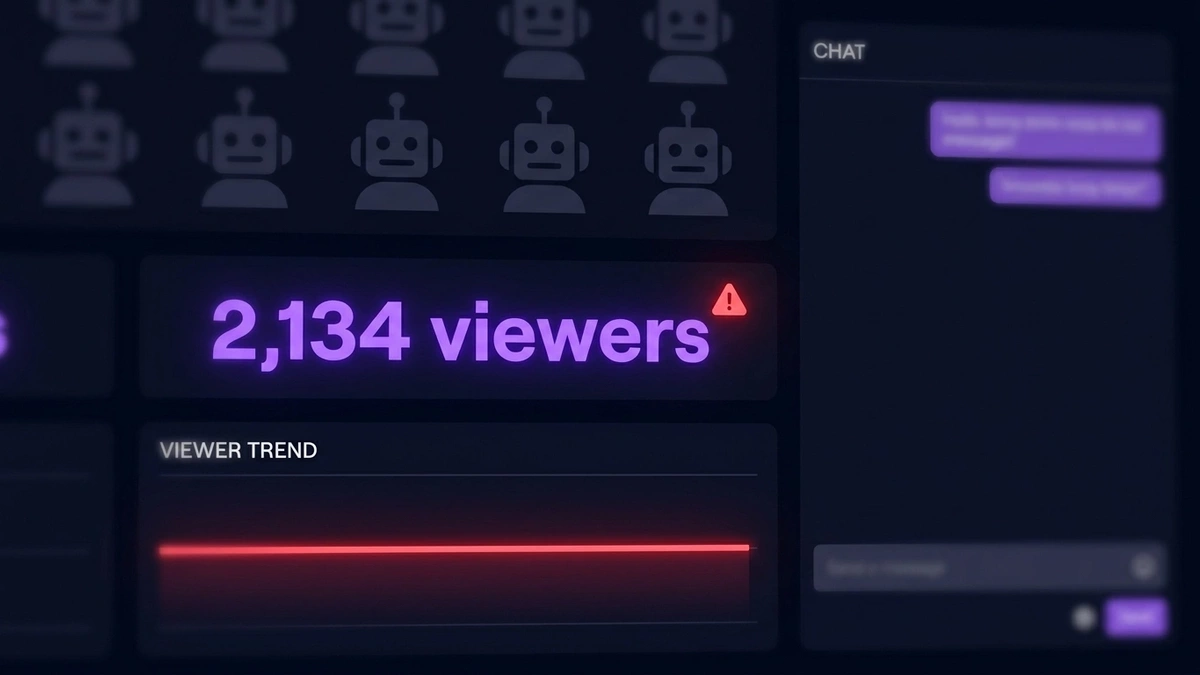
- High viewers, dead chat. The number one tell, hands down. 2,000 viewers and three messages a minute does not add up, ever.
- A flat or spiky line. Real crowds ebb and flow like a tide. Bot counts sit eerily frozen or leap in clean, unnatural steps no human audience produces.
- Few unique chatters. Tools that track chat activity expose a tiny puddle of real participants behind a huge viewer number.
- Followers that don’t track the viewers. Genuine viewership drags follows and subs along with it. Botted viewership leaves those numbers stuck in concrete.
No single sign is proof. People lurk. Quiet chats happen. But stack three or four of these together and you’re almost certainly staring at inflated garbage.
Fake Bots vs. Real Viewers: What Actually Grows a Channel
Peel off the marketing and there are only two products getting sold under the “viewers” label. People conflate them constantly, and that confusion is where the money disappears.
Hollow bots inflate a number and engage absolutely no one. Detectable, worthless for growth, and a live ban risk.
Real, retained viewers behave like an actual audience: they hold the count steady, lend believable social proof, and give a new visitor a reason to hang around long enough to follow.
If you’re going to spend money here at all, the only version worth a second glance is the second one. A transparent service built around real, retained viewers instead of throwaway connections. That’s the gap between a real-viewer service like TheViewbot and a $5 bot panel: one is built to look and behave like an actual audience and warm up a channel’s social proof, the other just spikes a number Twitch and your own chat see through in seconds. And even then? Treat it as a supplement that buys early visibility, never a replacement for the real thing, and always confirm how the service works against Twitch’s current policy before you touch it. Skip that check and the ban risk is on you.
Because here’s the uncomfortable truth this industry tap-dances around: no purchased number follows, subscribes, raids, or comes back on its own. Only real viewers do that. The boost cracks the door open. The channel still has to earn the room.
Which is why the smart sequence runs organic-first. Pull your first real viewers with smart category picks, clips, and showing up consistently, then let any paid visibility amplify a channel that already converts instead of propping up an empty one. We lay out the whole free playbook in our guide on how to get your first viewers on Twitch and Kick, and the same fake-versus-real logic shows up in how platforms now police inauthentic and automated activity.
The Bottom Line
So, do Twitch viewer bots work? The cheap ones don’t. They fake a number, fool nobody, and gamble your channel on a counter that resets the second you stop paying. The narrow, honest case for paid viewers is believable social proof from real, retained viewers feeding a channel that’s genuinely worth watching. Everything past that is money set on fire, and I’ve watched too many streamers strike the match.
Pour your energy where it compounds. Real viewers who chat, follow, and come back. That’s the only audience that ever turns into income.
Frequently Asked Questions
Flocker covers the streaming creator economy, from platform policy to growth, every week. Building from scratch? Start with how to get your first viewers on Twitch and Kick, then work the full Twitch growth roadmap.