What Counts as a Viewer on Twitch?
That little viewer number sitting on a Twitch stream looks dead simple. It isn’t. Lurkers, unique versus concurrent, embeds, bots, plus the question everybody actually wants answered: can the streamer see who’s behind the count? Misread it and you’ll misread your whole channel.
Plain English, no fluff. This is what counts as a viewer on Twitch, what that dashboard is really showing you, and what a streamer genuinely can and can’t see about the people watching.
What Counts as a Viewer on Twitch?
A viewer is any active connection currently watching your live stream. Someone has your channel open and the stream is playing? They count. Doesn’t matter if they’re locked in or have it muted in a background tab. No chatting, no following, not even a login required to register on the counter.
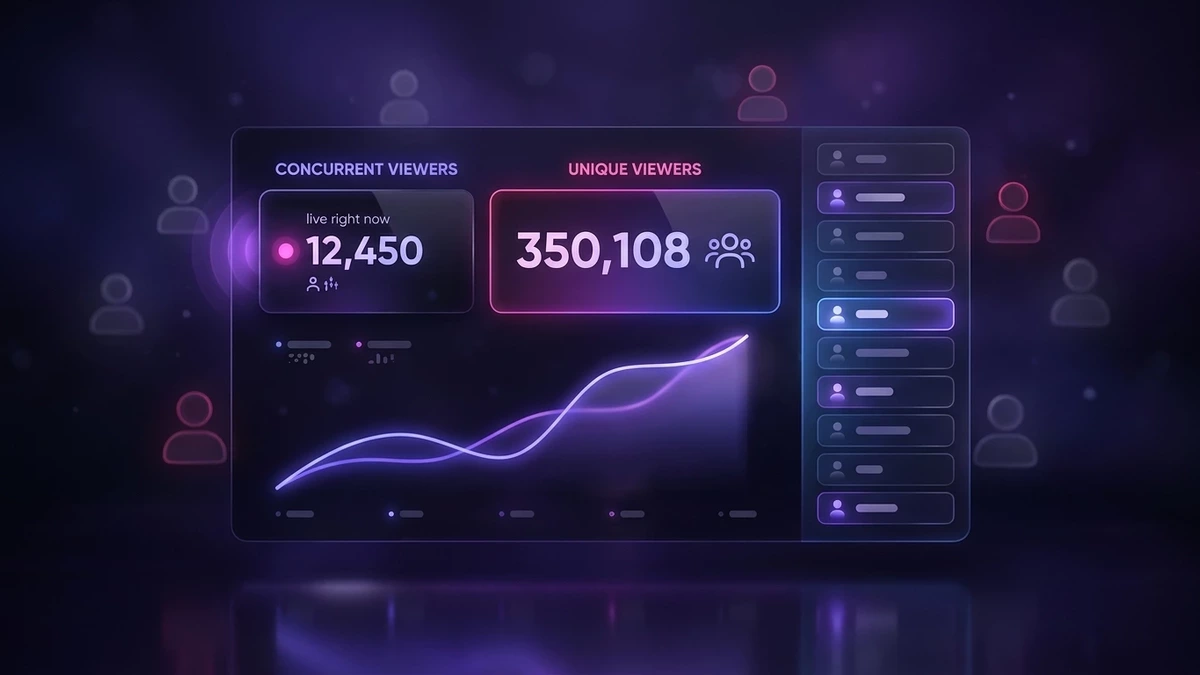
That number on your stream is your concurrent viewers: how many connections are watching right now. It never sits still. People pile in, people bail, and the count jumps around all session.
Do Lurkers Count as Viewers?
Do lurkers count as viewers? Yes, every single one. A lurker is just someone watching without chatting, and they’re the silent majority on almost every stream you’ll ever run.
Unique Viewers vs Concurrent Viewers
Here’s the distinction that trips up half the people reading their own dashboard. Get it backwards and your analytics will lie to you.
- Concurrent viewers: how many people are watching at the same moment. The live number on your stream, and the basis for “average viewers.”
- Unique viewers: the count of individual people who watched at least once over a stream or period, each one counted a single time.
Picture a three hour stream that peaks at 20 concurrent viewers. That same session might rack up 120 unique viewers, because people cycle in and out all night. Unique measures reach. Concurrent measures how many you hold at once. Both matter, and mixing them up makes a healthy channel look dead, or a dead one look healthy.
Can Twitch Streamers See Who Is Watching?
So can Twitch streamers see who is watching? The honest answer is partly. Nobody hands a streamer a tidy list of every single person behind the viewer count.
What a streamer can pull up is the viewer list, the logged-in users currently sitting in the channel and chat, opened straight from chat. What they cannot see is the identity of silent, logged-out lurkers. Watch a stream logged out, or just keep your mouth shut in chat, and you’ll show up in the total count but never by name. The dashboard shows the number watching, not a named roster of every person in the room. Lurk quietly and you’re genuinely anonymous to the streamer. That’s not a loophole, that’s just how it works.
Do Bots and Fake Viewers Count?
Technically? A bot connection can shove the live number up. Practically, it counts for nothing.
Fake viewers from view bots don’t chat, don’t convert, and don’t stick around, and Twitch actively purges them off the count. Worse, they open up that tell-tale gap between a high viewer number and a stone-dead chat, and that gap screams fake to Twitch and to anyone scrolling past. An inflated number is not an audience. It never was. We break down exactly why viewer bots don’t actually work and how that fake-versus-real gap gets spotted in seconds.
How to See and Track Your Real Viewers
Inside the platform, your Creator Dashboard and Stream Summary show concurrent viewers, average viewers, and unique viewers reach per stream. For the longer trend, whether your real audience is actually climbing or just spiking once and flatlining, you’ll want dedicated analytics. A streaming analytics tool like TheViewbot’s is one way to watch concurrent and unique viewership move week over week as you grow.
The metric that matters most isn’t the peak number. It’s whether genuine, engaged viewers keep coming back. That’s the only count that ever turns into followers, subs, and actual income. Still grinding toward your first handful? Start with how to get your first viewers on Twitch and Kick.
The Bottom Line
So, what counts as a viewer on Twitch? Any live connection watching your stream. Lurkers included, bots excluded in every way that matters. Concurrent viewers show who you hold this second, unique viewers show your total reach, and the streamer sees the count, never a name for every silent watcher. Read those numbers right and you’ll finally know whether your channel is growing.
Frequently Asked Questions
Flocker explains the streaming creator economy in plain English every week. Ready to grow the number for real? Start with how to get your first viewers on Twitch and Kick, or see the full guide to growing your Twitch channel.